Google Shifts, The Web Shivers: What This Month’s Volatility Signals for SEO and GEO
Did you feel your rankings wiggle the first week of November? You’re not alone.
The first week of November didn’t look dramatic from the outside. No sweeping core update, no new guidelines, no algorithm panic. But behind the scenes, search felt different. Pages that were stable for months suddenly shifted. AI-generated answer boxes behaved unpredictably. Visibility charts spiked like polygraph needles. These aren’t the symptoms of a simple ranking recalibration… They’re the early tremors of the generative-search transition… signs of the slow handoff from classic SEO to GEO.
What Actually Changed This Month
Google didn’t announce a core update, but the behavior across the ecosystem says otherwise. This wasn’t the typical week-to-week wobble you see from normal SERP churn. The volatility spiked across several categories (finance, local, health, shopping) all at the same time. That usually means something structural, not seasonal.
A few signals stood out:
• Ranking Stability Broke in Multiple Directions
Sites that had held steady positions for months suddenly shifted five, ten, even twenty spots. And not in slow, rolling waves. These were sharp kind of movements that suggest Google recalibrated something under the hood, not just reweighted an on-page factor.
• AI-Generated Answer Experiences Became Less Predictable
Some queries triggered longform AI summaries. Others reverted to classic blue links. Some blended the two. This inconsistency usually means Google is testing thresholds: When should the AI answer take the lead? When should it step back? That experimentation creates turbulence.
• SERP Layouts Quietly Shifted
Search features appeared, disappeared, and reordered themselves without explanation: image packs moved higher, sitelinks compressed, local packs fluctuated. These are often the first hints of a larger, upcoming change, especially when they all move in the same week.
• Third-Party Tools Went Haywire
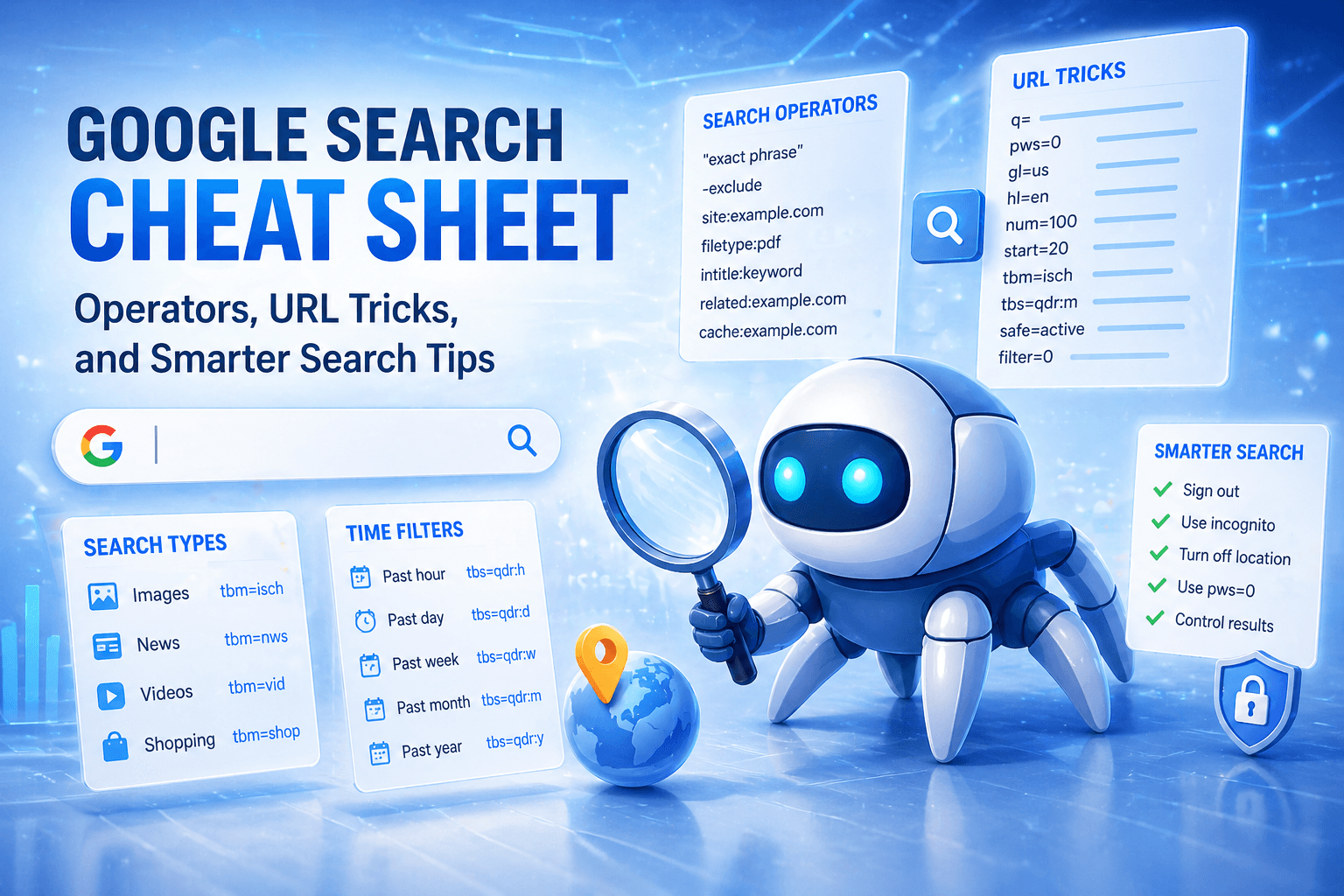
Ahrefs had to re-enable top-100 tracking after Google limited the num=100 parameter, which forced tools to rethink how they crawl Google’s results. Any time the measurement tools start struggling, it means Google is adjusting how results are served, not just what ranks.
• Google Search Console Showed the “Serving Issue” Spike
Google briefly acknowledged a “search serving” issue earlier in the month, and while it was downplayed, search history shows that “serving issues” often coincide with deeper system tuning. The timing lines up almost perfectly with the volatility window.
So what does all of this tell us?
It points to a recalibration of the search delivery layer — the part of Google that decides what to show, in what order, and whether to generate an AI answer at all. This layer is becoming more important than old-school keyword tweaks or link sprinting, because it’s where traditional SEO signals get merged with generative-model signals.
In other words:
Google isn’t just ranking pages differently. It’s deciding differently.
And that’s the part most SEOs will miss.
What This Means for SEO and Why It Matters Even More for GEO
Most people will look at November’s volatility and think, “Google tweaked something.” But if you zoom out, it’s more than a tweak. It’s a preview. These are the early signs of a search system that’s shifting from ranking pages to producing answers, and every shakeup in the SERP is a reminder that SEO and GEO are starting to overlap in ways the industry isn’t ready for.
Here’s what that actually means.
• Traditional SEO Still Works, But It’s Losing Its Monopoly
You can still optimize titles, improve internal links, tighten up your E-E-A-T signals. Those things matter. But the volatility shows how fragile pure ranking strategies can be when Google is simultaneously testing AI summaries, new layouts, and different retrieval thresholds.
SEO is no longer the only path to visibility.
It’s just one layer.
• Google Is Giving More Weight to “Machine Readability”
Structured data, consistent formatting, clear topical clusters, canonicalized URLs, schema alignment. These aren’t “technical niceties” anymore. They’re becoming the prerequisites for AI-driven search systems to understand, summarize, and cite you.
If your site is messy, the model will skip it.
It’s not that you’re wrong… it’s just that you’re hard to parse.
• Generative Answer Systems Can Outrank You Without Replacing You
One of the biggest misconceptions in SEO right now is that AI answers “kill” the organic results under them. But that’s not quite true. What they do is compress them. They reduce clickable real estate, redistribute user intent, and introduce a new game:
Be the source the AI trusts enough to reference. That’s GEO.
• The Old Playbook Doesn’t Explain This New Behavior
You can’t solve generative-search turbulence with more backlinks, longer articles, or keyword density tweaks. That’s like trying to tune a Tesla with carburetor rules. This volatility is coming from the retrieval, summarization, and scoring layers — not from on-page SEO signals.
If you don’t understand how LLMs interpret your content, you can’t optimize for them.
• Agencies Need to Prepare Clients for “Mixed Search”
The search experience is becoming hybrid: sometimes classic, sometimes generative, sometimes both. If your clients only understand SEO, they’ll panic every time Google decides to run another experiment. If they understand GEO too, the volatility becomes a signal rather than a threat.
Mixed search requires mixed strategy*:*
pages that rank
content that can be summarized
authority that models can verify
structured data models can ingest
entities models can associate
Why This Volatility Matters for GEO: The Shift Toward AI-Native Search
SEO changes when Google updates its algorithm.
GEO changes when Google updates its intent.
November’s quiet turbulence felt less like a classic ranking adjustment and more like Google refining the line between when to show links and when to generate answers. That line is the battleground where GEO lives. And it’s shifting faster than most people realize.
Here’s what the November signals reveal about the future of generative search:
• Google Is Actively Testing the Retrieval Layer
Generative answers don’t just “appear.” They rely on a retrieval engine, a system that selects which pages the model is allowed to read and synthesize.
When volatility hits multiple verticals in the same week, it often means Google is rewriting the rules of:
how documents are retrieved
which entities are considered authoritative
how many sources the model pulls from
when retrieval triggers an AI summary
If retrieval changes, GEO changes.
• AI Summaries Are Becoming Their Own Form of Ranking
November showed something subtle: even when organic rankings stayed the same, the presence of an AI summary changed click behavior dramatically. In some cases, the summary essentially became position #1 — even if it cited no one.
GEO isn’t about ranking higher.
It’s about being included in the model’s synthesis.
That’s a different skillset from ranking pages.
• The New “Topical Authority” Is Pattern-Based, Not Page-Based
Classic SEO thinks in URLs and keywords.
GEO thinks in embeddings and concept networks.
The volatility tracked this month suggests Google is boosting sites that exhibit:
consistent conceptual clusters
clean entity relationships
strong contextual relevance
stable semantic signatures
In other words: the sites that make sense to a model, not just a crawler.
If your site only wins in keyword matching and link flow, you’re vulnerable.
• Underspecified Entities Are Losing Ground
This is one of the most important (and least talked about) GEO signals.
When a person, brand, or topic doesn’t have clear context, models struggle. November’s shake-up showed that under-described entities — people with thin bios, brands without stable metadata, topics without structured definitions — slipped more than fully-defined ones.
In an LLM-driven world, if you aren’t described clearly, you aren’t retrieved confidently.
This is why your SEO business is smart to push:
signature pages
FAQ pages
consistent bios
entity-rich landing pages
structured metadata
When models know who you are, they know when to use you.
• The Gap Between Content and “Usable Content” Widens
Generative engines don’t treat all content equally. They prefer content that is:
structured
unambiguous
consistent
rich in entities
low in fluff
high in clarity
This month’s volatility rewarded those qualities.
It’s a preview of how AI-native search will prioritize content that can be synthesized cleanly.
GEO isn’t about writing more.
It’s about writing model-ready content.
• This Is a Dress Rehearsal for the Next Search Era
What we’re seeing isn’t the event… It’s the prelude.
Google is aligning:
ranking systems
retrieval layers
AI summaries
user behavior modeling
into a hybrid system that behaves less like a search engine and more like an answer engine.
The volatility is the side effect of that transition.
The opportunity is to build for it now while everyone else waits for a press release.
What to Do Right Now: Practical Steps for an Unstable, Hybrid Search Environment
Volatility is only a problem if you’re passive.
If you respond intentionally, it’s leverage.
Here’s what businesses, creators, and SEOs should do immediately to stay ahead of both traditional SEO shifts and the emerging GEO landscape.
1. Run a “Volatility Audit” Across Your Key Pages
Don’t look at sitewide averages. Zoom in on the pages that matter:
The ones driving conversions
The ones ranking top 10
The ones positioned as topical hubs
Look for sudden drops or jumps. Those movements tell you where Google reconsidered relevance. They’re clues to which topics might be reshuffling in the retrieval layer.
2. Rebuild Thin Entities Before the Models Forget You
If your personal brand, your business, or your clients have:
sparse bios
outdated “About” pages
inconsistent name formats
missing structured data
half-written FAQs
Fix them now.
Entity clarity is GEO oxygen.
A model can’t cite what it can’t identify.
3. Upgrade Your Content From “Readable” to “Model-Readable”
Ask yourself: Would an LLM understand this page without guessing?
Make it easy for machines to digest:
short declarative sentences
consistent terminology
clear definitions
headings that reflect real structure
schema markup (JSON-LD)
fewer rambling intros and keyword padding
GEO doesn’t reward fluff. It rewards clarity.
4. Refresh Old Content With Clean, Modern Formatting
A lot of SEOs underestimate how much formatting matters to retrieval systems.
Update older articles with:
tighter headers
improved internal linking
clarified entities
fewer tangents
explicit answers to implicit questions
This is one of the highest-ROI tasks you can do during volatility.
5. Add a FAQ Page to Every Important Entity
FAQ pages convert beautifully in generative search because:
they provide direct answers
they’re structured
they’re easy to summarize
they reinforce authority
This is why you’ve been adding FAQ pages for clients — and why Google’s volatility keeps rewarding them.
If a model needs a quick fact, FAQs are where it will look first.
6. Create One “Anchor Page” for Every Important Topic
The more fragmented your content is, the harder it is for retrieval systems to get a stable signal.
You need a single page that says:
what you do
what you know
what problem you solve
why you’re authoritative
Think of it as a homepage for each topic cluster.
Anchor pages stabilize your semantic identity.
7. Track SERP Features, Not Just Rankings
Being #3 under an AI summary is not the same as being #3 on a classic SERP.
Monitor:
AI answer presence
image packs
People Also Ask
Sitelinks
local packs
content carousels
product grids
Volatility in these features often matters more than your numeric rank.
8. Align Your Content With “Answer-First” Structure
If your content doesn’t answer the core query within the first 1–2 paragraphs, a model may treat it as irrelevant clutter. That’s the opposite of what you want.
Lead with:
definitions
outcomes
steps
core value
Then expand.
This mirrors how generative summaries extract information.
9. Don’t Panic. But Don’t Wait.
Volatility isn’t a sign that Google is collapsing.
It’s a sign that Google is transforming.
If you act early, you gain an advantage that compounds for months.
If you wait, you’re competing with everyone who finally wakes up in six months.
10. Teach Your Clients to Expect a Hybrid SERP
If you run an agency (like you), this month is your signal to start educating clients:
“Search isn’t one system anymore. It’s two systems overlapping.”
Once they understand:
rankings will fluctuate
AI answers will appear and disappear
click behavior will change
…your retention improves and your strategy becomes future-proof.
If November’s volatility taught us anything, it is that search is no longer a fixed landscape. It’s a living system. Google is not simply adjusting rankings. It’s rearranging the architecture of how information is found, interpreted, and delivered. That can feel chaotic in the moment, but it’s a rare chance to evolve alongside the platform that drives so much of the Web. The sites that embrace this transition toward clearer entities, cleaner structure, smarter content, and GEO-ready architecture will be the ones that rise as others stand still.
The future of search will be unpredictable, and that is what makes it exciting. We are entering a new era where creativity, clarity, and technical insight matter more than ever. For those willing to adapt, to experiment, and to build content that both humans and models genuinely understand, this is a fun moment to be in the game. The Web is shifting, and we get to shift with it.
Thanks for reading! If you want deeper insights from my day-to-day work in the field, subscribe to my weekly newsletter for $1/month.